

- ISSN: 2789-3111 (print) Impact Factor:9.0
- ISSN: 2789-312X (online) Publication Frequency:Four issues per year from 2025
About the Journal
Sustainable Structures (SUST; Sustain. Struct.) is an interdisciplinary journal publishing original research covering all aspects of science and technology concerned with sustainable structures.With the development of the journal, the publication frequency of Sustainable Structures was two issues per year from 2021 to 2023, three times a year for 2024, and four issues per year from 2025. SUST has been accepted for ESCI (IF 9.0, 2025, Q1, Web of Science), Scopus (Citescore 12.5, 2025, Q1), DOAJ, SCImago (SJR 1.596, 2025, Q1), Crossref and so on. The scope of the journal is devoted to reports of new and original experimental and theoretical research as well as the sustainable applications in the areas of structural engineering. Journal publications include mainly as following: Reviews, Research Papers, Technical notes, Meeting Reports, and Case Reports. With publication fees supported by Sustainable Development Press Limited (SDPL), SUST is an open access but free international journal focusing on the study of sustainable development structures. The purpose of the journal is to provide a platform for academic exchange, and to promote the research of green, low-carbon and sustainable development of structural engineering. PDF versions of all papers published in the journal could be downloaded freely from the journal website!
- OPEN ACCESS ARTICLE
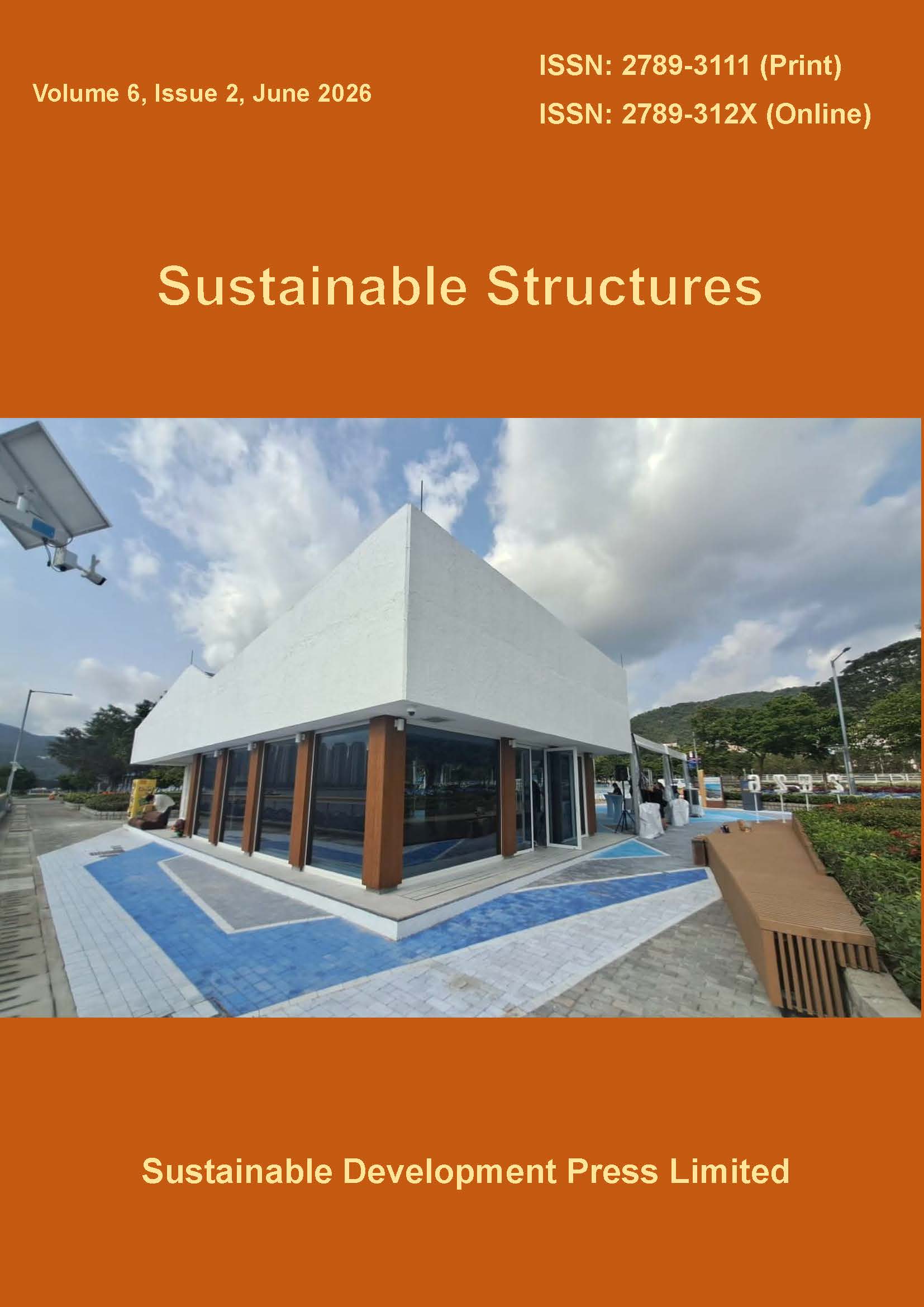
- Design and construction of a laminated bamboo lumber structure in Hong Kong
- Sustainable Structures Vol.6,No.2,2026 DOI:10.54113/j.sust.2026.000108 Online published:2026-6-10
- Abstract This paper presents a technical case study on the structural design and assembly of a community liaison center utilizing Laminated Bamboo Lumber (LBL) as the primary structural and architectural material. To guarantee structural integrity and economic optimization, a hybrid design methodology was implemented during the component cross-section phase, combining preliminary mechanics-based calculations with iterative finite element analysis for verification. Adopting Design for Manufacture and Assembly (DfMA) principles, the structural components were prefabricated off-site under factory-controlled quality conditions and subsequently transported for rapid on-site erection. This parallel workflow significantly reduced the construction time and minimized environmental disruption. Ultimately, this project establishes a scalable, empirical framework for the engineering deployment of LBL, validating its viability as a high-performance, low-carbon alternative for sustainable civil infrastructure.… More
-
 Views:263
 Downloads:256
 Download
- OPEN ACCESS ARTICLE
- Structural response of glued-laminated bamboo under compression: an experimental and analytical study
- Sustainable Structures Vol.6,No.2,2026 DOI:10.54113/j.sust.2026.000107 Online published:2026-6-10
- Abstract Glued-laminated bamboo (GLB) is an engineered bamboo product with significant potential for structural applications due to its dimensional stability, compression resistance, and aesthetics. This study investigates the structural response of 84 GLB compression elements of varying lengths and three cross-sectional dimensions. In addition, 12 specimens were tested under three-point bending to evaluate the elastic modulus for structural design purposes. Stress-strain behavior and failure modes were carefully examined to assess the integrity of GLB cross-sections, and an ANOVA was conducted to identify parameters influencing compression performance. Experimental data were used to derive regression models for ultimate load and compressive strength, accurately capturing the observed behavior. Short elements exhibited four stress-strain regions: elastic, hardening, plastic, and softening, whereas long elements failed by buckling with tensile fracture without noticeable plastic deformation. Based on the experimental curves, the Richard–Abbott and Popovics models were applied to simulate the compressive response, with the Richard–Abbott model showing better agreement. Theoretical analyses using GB 50005, Eurocode 5, and the National Design Specification for timber were applied to predict GLB column resistance, and deviations were critically discussed. This study provides insights into the behavior of small-section, high-slenderness GLB compression elements through experimental and analytical approaches.… More
-
Views:183
Downloads:172
Download
- OPEN ACCESS ARTICLE
- Assessing environmental impact through Computational Structural Optimization
- Sustainable Structures Vol.6,No.2,2026 DOI:10.54113/j.sust.2026.000106 Online published:2026-6-10
- Abstract The urgent need to reduce the construction sector’s environmental footprint is prompting a shift towards more sustainable methodologies. Traditional construction practices, marked by excessive resource consumption and high emissions, require immediate transformation. With their stringent energy and emission targets, European policies emphasize the critical role of integrated Life Cycle Assessment (LCA) in accurately evaluating sustainability. In this context, Structural Optimization (SO) techniques represent a powerful tool for incorporating environmental metrics within holistic design paradigms. This study presents a robust framework that synergistically integrates SO techniques with LCA methodologies to estimate and mitigate the environmental impacts of a space-frame structural system. Employing generative computational design techniques, this work leverages the Visual Programming Language (VPL) to define optimal configurations for parametric structural models. Specifically, the optimization process prioritizes material efficiency and Global Warming Potential (GWP) as key environmental metrics by simultaneously optimizing size, shape and topology. The implementation of a Multi-Objective Evolutionary Algorithm (MOEA) yields multiple solutions with the identification of a Pareto-optimal front, balancing structural performance with environmental considerations. This study demonstrates that the adoption of hybrid-material solutions incorporating timber elements can substantially reduce the associated GWP compared to traditional steel systems without penalizing structural efficiency. The results emphasize the importance of integrating environmental parameters within the conceptual design phase to promote sustainability in practical applications within the Architecture, Engineering and Construction (AEC) field.… More
-
Views:139
Downloads:163
Download
- OPEN ACCESS ARTICLE
- Study on properties of one-part fly ash/slag based geopolymer mortars modified by cellulose nanocrystals
- Sustainable Structures Vol.6,No.2,2026 DOI:10.54113/j.sust.2026.000105 Online published:2026-6-10
- Abstract In this study, a small amount of cellulose nanocrystals (CNC) were added to fly ash (FA)/granulated ground blast furnace slag (GGBS)-based geopolymer mortars to investigate the performance influence and action mechanism of the modified FA/GGBS-based geopolymer mortar by CNC. The results showed that following a 28-day curing, the best mechanical performance was achieved when the FA/GGBS mass ratio was 3:7; compared to the 5:5 mass ratio of FA/GGBS, the compressive strength and flexural strength increased by 14.96% and 40.74%, respectively; and compared to the 7:3 mass ratio of FA/GGBS, the compressive strength and flexural strength increased by 112.12% and 80.95%, respectively. However, with higher GGBS proportions, the flowability decreased. Additionally, the effect of CNC was inconsistent in systems. At 3-day curing age, in the FA/GGBS=3:7 and 5:5 systems, the addition of CNC inhibited the strength development of geopolymer mortars, whereas in the FA/GGBS=7:3 system, it slightly accelerated the strength development. However, after 28 days of curing, the strength of the geopolymer mortars under all conditions increased to varying degrees after the addition of CNC. Microstructural tests via scanning electron microscopy-energy dispersive spectroscopy (SEM-EDS) and isothermal calorimetry (IC) showed that increasing GGBS content and adding CNC enhanced the reaction activity and structural compactness of FA/GGBS-based geopolymer mortars.… More
-
Views:138
Downloads:270
Download
- OPEN ACCESS ARTICLE
- Experimental investigation of the effects of various silica-based pozzolanic ashes on the rheological and mechanical properties of ultra-high-performance concrete: optimization and structural analysis
- Sustainable Structures Vol.6,No.2,2026 DOI:10.54113/j.sust.2026.000104 Online published:2026-6-10
- Abstract In this study, a comprehensive and comparative analysis was conducted on nine types of silica-rich agricultural waste ashes including rice husk ash, peanut shell ash, sugarcane bagasse ash, date palm fiber ash, corn stalk ash, wheat straw ash, cotton stalk ash, soybean husk ash, and pine fiber ash as pozzolanic replacements in Ultra-High-Performance Concrete (UHPC). Fresh properties were evaluated through slump flow, J-ring, L-box, U-box, and V-funnel tests, while hardened properties were assessed via compressive strength, tensile strength, modulus of elasticity, freeze–thaw durability, permeability, chloride and sulfate resistance, and thermal conductivity tests. Response Surface Methodology (RSM) was employed to model the synergistic effects of variables and predict compressive strength at 28 and 90 days. Results indicated that replacing 30% of cement with rice husk ash improved compressive strength, tensile strength, and modulus of elasticity by 15%, 46%, and 27%, respectively, while reducing permeability and thermal conductivity by 48% and 27%. RSM analysis demonstrated high predictive accuracy (R² = 0.99). This study provides an integrated framework for designing sustainable and advanced concrete by optimizing the incorporation of waste materials while achieving superior mechanical and thermal performance.… More
-
Views:143
Downloads:185
Download
- OPEN ACCESS ARTICLE
- Reinforcing concrete with jute fiber: a holistic approach to mechanical performance, thermal insulation and carbon footprint reduction
- Sustainable Structures Vol.6,No.2,2026 DOI:10.54113/j.sust.2026.000103 Online published:2026-6-10
- Abstract The concrete, thus, as a modern-day building material, sustains serious challenges in the area of environmental and mechanical limitations. This investigation concentrates on the viability of jute fiber as a sustainable reinforcement stuff. For jute fiber-reinforced concrete (JFRC) composites, a complex explorative sequence was developed to examine mechanical characteristics such as split tensile strength, compressive strength, flexural strength, modulus of elasticity, and durability tests, for example, water absorption, chloride penetration resistance, water permeability, and thermal conductivity. The investigation went further to evaluate the embodied carbon of JFRC in order to appraise its environmental sustainability. Results show that adding jute fiber by a volume fraction of between 0.25 and 0.5% makes noticeable enhancements to mechanical characteristics. On the other hand, a larger fiber content (>0.5%) and longer fibers (17.5 mm) were also found to increase porosity and water absorption, adversely affecting durability. The study brings out the identification of optimum fiber length (12.5 mm) and content dictating mechanical action against durability. Jute fiber integration substantially reduces concrete's embodied carbon, making it an eco-friendly building alternative. This research generates an important understanding of natural fibers within concrete, opening a route to developing low-carbon, high-performance building materials.… More
-
Views:173
Downloads:180
Download
- OPEN ACCESS ARTICLE
- Mechanical properties, microstructural features, and acoustic behaviour of recycled aggregate concrete reinforced with plastic and polypropylene hybrid fibers for sustainable construction
- Sustainable Structures Vol.6,No.2,2026 DOI:10.54113/j.sust.2026.000102 Online published:2026-6-10
- Abstract The increasing demolition of aged infrastructure has significantly raised the generation of recycled aggregates, posing sustainability challenges in construction waste management. Integrating recycled aggregates into concrete production is a potential solution, although they typically exhibit inferior mechanical performance compared to natural aggregates. To overcome this, hybrid fiber reinforcement has gained research interest for improving Recycled Aggregate Concrete (RAC) characteristics. This study examines the performance of RAC reinforced with a combination of plastic and polypropylene fibers used in macro and micro forms respectively to improve resistance against cracking and enhance structural integrity. The concrete was prepared with a 50% replacement of natural aggregates by recycled aggregates, and fiber contents were varied (0.5%, 1%, and 2%). For hybridization, combinations of plastic and polypropylene fibers were tested at three dosage levels: (0.5% PF + 0.5% PP), (0.75% PF + 0.25% PP), and (1.5% PF + 0.5% PP). The impact of fiber type and dosage on mechanical strength, failure patterns, stress strain response, and acoustic emission behavior was investigated. Results showed that the hybrid mix RAC50-PF0.75-PP0.25 yielded superior strength values, achieving 48.56 MPa in compressive strength, 5.19 MPa in splitting tensile strength, and 5.75 MPa in flexural strength, representing improvements of approximately 7%, 5.5%, and 4% respectively over the plain RAC mix.… More
-
Views:180
Downloads:179
Download
- OPEN ACCESS ARTICLE
- Innovative eco-development of recycled scrap-tire steel fibers (STSF)-based concrete composite for Saudi construction industry: a review of properties, performance, and applications
- Sustainable Structures Vol.6,No.2,2026 DOI:10.54113/j.sust.2026.000101 Online published:2026-6-10
- Abstract The growing demand for sustainable construction materials is critical to reduce environmental burdens, especially in rapidly urbanizing Saudi Arabia. This review advanced the eco-development of recycled scrap-tire steel fiber (STSF) concrete by linking STSF recovery and processing routes, fiber geometry, cleanliness, and tensile quality to interfacial micromechanics and composite performance. It proposed a unified STSF classification, supported by effect-size synthesis, to standardize reporting, reconcile disparate test methods, and enable performance based specifications. The review systematically evaluated how STSF length, diameter, and dosage influence strength, toughness, crack control, and structural response, while also assessing sustainability and structural efficiency gains through waste diversion and reduced carbon intensity. Evidence across the literature is synthesized to identify effective reinforcement strategies, key dispersion and bonding mechanisms, and practical mix optimization pathways aligned with Saudi supply chains and exposure conditions. The findings underscore the potential of STSF-based composites to contribute to eco-efficient construction, enhancing the mechanical resilience and lifespan of concrete structures. Moreover, this research provided a critical foundation for future studies and practical implementations, positioning STSF as a strategic component in advancing green construction practices within Saudi Arabia and globally. The study reinforced circular-economy principles with sustainable materials for global construction. Besides, it outlined a practical, micromechanics-guided route from waste-tire recovery to field-deployable high-performance concrete in the Kingdom of Saudi Arabia.… More
-
Views:150
Downloads:158
Download
- OPEN ACCESS ARTICLE
- Load-bearing performance of laminated bamboo lumber-steel plate single-bolt connections
- Sustainable Structures Vol.6,No.1,2026 DOI:10.54113/j.sust.2026.000100 Online published:2026-1-2
- Abstract In order to investigate the mechanical properties of laminated bamboo lumber-steel plate bolted connections under compression parallel to grain, a series of tests has been carried on considering the diameter of the bolts, the thickness of the main component and the end spacing of the bolts. The failure mode, stiffness, bearing capacity and ductility ratio of the connections were studied considering the influencing factors. The test results show that the failure mode gradually changes from brittle shear failure to ductile yield failure with the increasing of the thick-to-diameter ratio. As the diameter of the bolt increased, the stiffness and load of the connections increased gradually, but the ductility ratio did not change after the diameter reached about 16 mm. The initial stiffness of the connections reached the maximum value at 125 mm thickness of the main component. The yield load and ultimate load no longer showed a significant increasing trend after the thickness reached 100mm, and the ductility ratio was less affected by the thickness of the main component than by the diameter. The end spacing of the bolts had no significant effect on the load-bearing performance of the connections compared to the bolt diameter and the thickness of the main component. Based on the test results comparing the current national wood structure design standards, the American standards are more conservative, while the Chinese and European standards are in good agreement with the test. Considering the bolt diameter and the main component’s thickness as the main influencing factors, the load-bearing formula was proposed and it could give a reference for calculating the bearing capacity of laminated bamboo lumber-steel plate single-bolt connection.… More
-
Views:638
Downloads:751
Download
- OPEN ACCESS ARTICLE
- Effects of the use of recycled concrete aggregate on compressive behavior of partially encased composite columns
- Sustainable Structures Vol.6,No.1,2026 DOI:10.54113/j.sust.2026.000099 Online published:2026-1-2
- Abstract Using recycled concrete aggregate (RCA) can offer significant sustainability benefits by reducing waste and lowering the environmental impact on construction. This study presents a series of tests on short partially encased composite (PEC) columns to investigate the effects of RCA on the compressive behavior of PEC columns cast with recycled aggregate concrete. A total of 15 PEC columns and three bare steel columns were tested under concentric axial compression loads. The test incorporated five RCA replacement ratios (0%, 25%, 50%, 75%, and 100%) and three link spacing-to-depth ratios (0.33, 0.5, and 0.67). The failure modes, load-strain behavior, load capacity, and ductility were assessed to evaluate the effects of the RCA replacement ratio and link spacing. The failure mode was similar for all the PEC columns: crushing of concrete, and buckling of steel flanges. The test results indicate that columns become more brittle when the RCA replacement ratio exceeds 50% since RCA contains microcracks. However, under concentric loading, the effects of the RCA replacement ratios on column strength were negligible across different link spacing. Incorporating RCA resulted in a maximum 6% drop in strength. An increase in link spacing reduced the ultimate load for all columns. The initial stiffness was also comparable for different RCA replacement ratios and link spacings. Increasing the RCA replacement ratio increased the strain at peak load, especially for smaller link spacings. The current design guidelines for PEC columns with natural aggregate concrete can be safely used to predict the capacity of the PEC columns incorporating RCA. These findings enhance sustainable building techniques by illustrating that RCA can be utilized efficiently in PEC columns without a considerable decline in strength and stiffness.… More
-
Views:637
Downloads:682
Download
- OPEN ACCESS ARTICLE
- Mechanical and thermal properties optimization of an innovative mortar incorporating PVC waste for enhanced energy efficiency
- Sustainable Structures Vol.6,No.1,2026 DOI:10.54113/j.sust.2026.000098 Online published:2026-1-2
- Abstract Given the significant environmental challenges posed by plastic waste, innovative reuse strategies are essential. This study seeks to bridge a gap in prior research by investigating the novel application of polyvinyl chloride drainage pipe waste (PVC) as a partial sand substitute in mortar, aiming to enhance both the thermal behavior and mechanical performance. Previous studies have noted that while integrating plastic waste into construction materials can enhance thermal properties, it frequently results in a reduction of mechanical strength. To address this issue, our study carefully considered the size of PVC aggregates. Seven substitution rates (0%, 5%, 10%, 15%, 20%, 25%, and 30% by weight) were evaluated through laboratory tests, including bulk density, water absorption, compressive and flexural strength, thermal conductivity, volumetric heat capacity, and thermal diffusivity. Additionally, numerical simulations using TRNSYS software on office buildings assessed the energy-saving potential. Furthermore, a multi-objective optimization approach was introduced to identify the optimal mix composition, balancing mechanical strength and thermal performance. Results showed that increasing PVC content improved thermal properties, with an optimal substitution rate also enhancing mechanical characteristics. Notably, a 30% replacement rate demonstrated significant energy savings, which could be further increased by increasing the mortar thickness.… More
-
Views:419
Downloads:593
Download
- OPEN ACCESS ARTICLE
- Dimensional stability and mechanical performance of cement -mortar mix with phragmites-australis fibers at elevated temperature
- Sustainable Structures Vol.6,No.1,2026 DOI:10.54113/j.sust.2026.000097 Online published:2026-1-2
- Abstract The building structure faces the dual challenge of CO₂ emission reduction and performance/sustainability improvement of construction materials. In this respect, in recent times, interest in the incorporation of natural fibers into cementitious systems has been rising as a promising route for attaining these objectives. This paper investigates the effects of adding Phragmites-Australis (Ph-A) fibers on the properties of flexural and compressive strength and length change, including chemical shrinkage, drying shrinkage, and expansion, of cement mortar when exposed to elevated temperature (45°C). Ph-A fibers were added by volume of mix with different percentages of 0, 0.5, 1 and 2%. Furthermore, a maturity equation was used for the prediction of shrinkage behavior including ultimate shrinkage, time scale factors, and hydration rates. Experimental results revealed that the addition of 1% Ph-A fibers significantly improved flexural and compressive strength while density decreased with increasing fiber content. Besides, the addition of 2% Ph-A fibers reduced chemical shrinkage by 25%, autogenous shrinkage by 12.4%, drying shrinkage by 17.8%, and expansion by 14.9% compared to the control mix. The maturity equation presented very good agreement with the experimental data, confirming its reliability in shrinkage predictions. These results put into evidence the potential of Ph-A fibers to enhance the mechanical and dimensional performance of cement mortar, offering a sustainable solution for reducing environmental impact and advancing durable construction materials.… More
-
Views:410
Downloads:651
Download
- OPEN ACCESS ARTICLE
- Post-tensioning of structural members using natural fiber ropes
- Sustainable Structures Vol.6,No.1,2026 DOI:10.54113/j.sust.2026.000096 Online published:2026-1-2
- Abstract Natural fiber composites have recently gained popularity in construction due to their numerous benefits. Their applications include incorporation into the concrete mixture, potential replacement of steel reinforcement in reinforced concrete components, and strengthening of structural elements. Notably, despite their relatively low stiffness, these materials exhibit a good load-bearing capacity in tension, indicating that post-tensioning may represent the most effective technique for employing these materials in conjunction with concrete. Surprisingly, this technology has yet to be considered in structural concrete research. The current study presents a thorough analytical, experimental, and numerical approach to assess the efficacy of post-tensioning concrete members using natural jute fiber (NJF) ropes. Preliminary analytical investigations reveal that the proposed post-tensioning can improve a beam's flexural strength by 5.9% when a single rope is used. The experimental validation supports the reliability of the analytical findings, with numerical analysis indicating a potential improvement of 16.3% when the number of ropes used on the same beam is increased to four. Overall, the enhanced flexural performance of concrete structural elements through post-tensioning with NJF ropes appears promising. This novel technique not only improves the flexural performance of concrete members but also has the potential to address critical issues related to conventional post-tensioning, such as the corrosion of steel cables. Additionally, it offers increased flexibility by facilitating the replacement of ropes when required, making it a practical and versatile solution for several concrete applications in the construction industry.… More
-
Views:426
Downloads:636
Download
- OPEN ACCESS ARTICLE
- Bond of steel and FRP reinforcement in recycled aggregate concrete: a critical review
- Sustainable Structures Vol.6,No.1,2026 DOI:10.54113/j.sust.2026.000095 Online published:2026-1-2
- Abstract The use of recycled concrete aggregates (RCA) in recycled aggregate concrete (RAC) presents a solution to reduce dependence on raw natural resources. However, the bond behaviour of reinforcing bars embedded in RAC is challenging, mainly due to contradictory results in literature. This critical review examines the mechanisms influencing bond strength of steel and fibre reinforced polymer (FRP) reinforcement in RAC, emphasising key factors such as surface roughness, interaction at the interfacial transition zone (ITZ), and the concrete’s properties. Additionally, the review discusses the main differences in bond performance between FRP reinforcement and normal steel bars, highlighting the FRP bars’ reliance on adhesion and friction, rather than mechanical interlocking. Various testing methods in line with current standards are discussed, alongside relevant design equations from European and North American guidelines for anchorages and lap splices. It is found that moderate RCA replacement levels (50%-75%) can improve the bond strength of bars due to a rougher interfacial transition zone. However, high levels of RCA replacement (~100%) can reduce bond strength by up to 38%. Current design codes primarily focus on steel and FRP reinforcement embedded in normal concrete, and therefore these should be revised to extend their applicability to RAC elements to promote the faster adoption of RAC in engineering practice. Future research needs are also provided. This study contributes towards a better understanding of bond behaviour of reinforcement in RAC, which in turn is expected to facilitate the broader adoption of circular economy practices in construction.… More
-
Views:355
Downloads:495
Download
- OPEN ACCESS ARTICLE
- Void content and initial surface absorption of palm kernel shell laterized concrete
- Sustainable Structures Vol.6,No.1,2026 DOI:10.54113/j.sust.2026.000094 Online published:2026-1-2
- Abstract This study investigates the viability of incorporating palm kernel shell (PKS) and laterite as sustainable replacements for conventional granite and sand aggregates in concrete. Through detailed analysis of void content and initial surface absorption, the durability and environmental suitability of PKS-laterized concrete were evaluated under varying water-cement ratios and replacement levels. Results indicate that both PKS and laterite increase void content and surface absorption, with these effects intensified at higher water-cement ratios. However, a mix containing 10% PKS and 10% laterite demonstrated durability metrics comparable to those of traditional concrete, showing strong resistance to chloride ingress and suitability for severe coastal environments. At a 0.4 water-cement ratio, PKS-laterized mixes achieved durability standards for coastal and urban applications, whereas a 0.45 ratio proved effective for moderate coastal exposures. These findings support the potential of PKS-laterized concrete as a sustainable building material, reducing reliance on natural aggregates while maintaining performance. Further research is recommended to confirm the long-term durability of these mixes across diverse environmental exposures and to refine mix designs for optimal strength and permeability. This study contributes to the field of eco-friendly construction materials, aligning with global sustainability goals and resource conservation.… More
-
Views:422
Downloads:762
Download
- OPEN ACCESS ARTICLE
- Application of an original method to the design of composite beams and comparison with the American Standard NDS 2005
- Sustainable Structures Vol.6,No.1,2026 DOI:10.54113/j.sust.2026.000093 Online published:2026-1-2
- Abstract In the elastic field, for beams of rectangular cross-section composed of several vertical layers of materials and linked through horizontally arranged mechanical connectors, it is necessary to know the law of horizontal shear stresses (τ_zx) to determine the cross-section and spacing of such connectors. Currently, there are only two methods to solve the problem without taking into account the finite element method: the Empirical Method, without a theoretical basis, and the Rational Method, based on the NDS 2005, which does not take into account the horizontal shear stresses (τ_zx). According to numerous authors, both methods lead to conservative results in the spacing of mechanical connectors. A novel method, based on a simplified equation, describes the law of horizontal shear stresses (τ_zx) and solves the problem simply and with acceptable accuracy. Two equations catalogued as exact solutions to the stress problem that had never been used for this purpose before have been applied to verify the results. In addition, to validate the new elastic method, information from four-point bending tests performed on specimens of wood beams reinforced with steel plates linked with different connection means, such as bolts, screws, nails and combinations, was used to validate the new elastic method. Fifty-four states were analyzed for flitch beams, varying the magnitude of a uniform load and the span for a simply supported beam. The mechanical connector was adopted as ½ inch for all cases. The Rational and Elastic methods used the NDS 2005 specifications to consider humidity and temperature. The results showed that the spacing of the mechanical connectors according to the Rational Method was conservative since it required a design load perpendicular to the grain. In addition, the New Method made it possible to obtain a larger spacing between mechanical connectors, reducing the number of bolts without affecting the resistance to horizontal shear stresses of the beam. The New Method demonstrated great practical utility and potential to be incorporated into the Allowable Stress Design method of the NDS 2005.… More
-
Views:483
Downloads:483
Download
- OPEN ACCESS ARTICLE
- Compressive strength prediction of sustainable concrete incorporating non-potable water via advanced machine learning
- Sustainable Structures Vol.5,No.4,2025 DOI:10.54113/j.sust.2025.000092 Online published:2025-12-8
- Abstract Concrete production imposes substantial environmental burdens, primarily through high carbon emissions and significant freshwater usage. This study addresses these challenges by developing a machine learning-based model to predict the compressive strength of concrete incorporating non-potable water, supporting sustainable construction practices. A comprehensive dataset of 1,056 samples was compiled from existing literature, encompassing key mix parameters such as fine and coarse aggregates, water-to-cement ratio, pH, and various supplementary cementitious materials. Multiple regression models were evaluated to predict compressive strength. Among these, the best-performing model achieved an R² of 0.98 and an RMSE of 1.45, demonstrating excellent predictive accuracy. Feature importance analysis identified the water-to-cement ratio, fine aggregate, and pH as the most influential variables affecting strength development. The study also applied explainable AI techniques to improve model interpretability and support informed engineering decisions. Sensitivity analysis confirmed model robustness across variable pH conditions, reinforcing its applicability to real-world wastewater variability. The results underscore the value of integrating non-potable water into concrete design and demonstrate the potential of optimized ML models to enhance resource efficiency, reduce environmental impact, and guide the development of greener infrastructure solutions.… More
-
Views:893
Downloads:893
Download
- OPEN ACCESS ARTICLE
- Mechanical properties of bamboo scrimber under bolted connections with steel splints
- Sustainable Structures Vol.5,No.4,2025 DOI:10.54113/j.sust.2025.000091 Online published:2025-12-8
- Abstract Taking the bolt edge distance and pitch of bolts as the influencing factors, the tensile test of 8 groups (5 repeated groups in each group) was designed by connecting the parallel-to-grain specimens of bamboo scrimber with steel splint bolts. Based on the 5%D offset method of the American code, the key mechanical properties such as yield load and ultimate load are obtained. The test results show that the change of the bolt edge distance has little effect on the mechanical properties of the tensile specimen under the design size of the specification. The change of pitch of bolts has a significant effect on the yield load of the specimen. With the increase of spacing, the yield load and ultimate load increase gradually, reaching the maximum at 6D, and then decreasing slightly. Four typical failure modes and typical load-displacement curves of all specimen groups were analyzed. The difference between the predicted value and the experimental value in different standard calculation methods was compared. Based on the failure mode IV of double shear connection in Johansen and the cable effect and group bolt effect, the calculation formula of shear bearing capacity of steel splint bolt connection suitable for bamboo scrimber was proposed.… More
-
Views:380
Downloads:466
Download
- OPEN ACCESS ARTICLE
- Creating a new type of concrete by using waste electrical cable plastic and waste electrical cable rubber: as a sustainable approach
- Sustainable Structures Vol.5,No.4,2025 DOI:10.54113/j.sust.2025.000090 Online published:2025-12-8
- Abstract Solid waste is among the World's most critical environmental issues. One of the most significant shares of total solid waste is occupied by electronic waste. One way to reduce waste is to use it as an aggregate in Sustainable Concrete (SC). However, there is little research on using waste electrical cable rubber (WECR) or Waste Electrical Cable plastic (WECP) in concrete, unlike waste tire rubber and plastic in concrete, which have attracted much attention among researchers. Research was conducted by substituting waste electrical cable - plastic sand (WEC-PS) instead of natural sand, and Waste Electrical Cable -Rubber Filler (WEC-RF), as an addition in concrete, accounted for 5%, 10%, 15%, and 20% respectively for both. Researched compressive strength, flexural strength, splitting strength, modulus of elasticity, and unit weight of concrete. Experimental studies revealed that replacing natural sands with WEC-PS increases strength by 18.10%. It seems obvious that replacing natural sands with WEC-PS up to 15% or adding WEC-RF up to 5% increases the mechanical properties of concrete. However, the situation changes when using in large ratios.… More
-
Views:359
Downloads:547
Download
- OPEN ACCESS ARTICLE
- Advancing sustainable composite flooring: cold-formed steel and timber systems for residential and mid-rise applications
- Sustainable Structures Vol.5,No.4,2025 DOI:10.54113/j.sust.2025.000089 Online published:2025-12-8
- Abstract This paper introduces and verifies advanced three-dimensional finite element (FE) models for lightweight composite flooring systems composed of cold-formed steel (CFS) joists combined with structural plywood sheathing. The numerical models, developed in ANSYS, incorporate both material and geometric nonlinearities, simulate the load–slip response of mechanical fasteners, and include realistic contact definitions to capture the interaction between different components. The models were rigorously benchmarked against full-scale experimental tests, demonstrating strong agreement in terms of load–deflection behaviour, strain distribution along the section depth, and observed failure mechanisms. Building on this validation, extensive parametric analyses were performed to evaluate the impact of key design parameters, such as joist wall thickness, section depth, and the spacing of shear connectors. The findings confirm that increasing the thickness and depth of the steel joists enhances the flexural stiffness and load capacity of the flooring system, while closer fastener spacing improves composite action and overall structural efficiency. Finally, a simplified design example is provided to illustrate the proposed method for estimating bending resistance and serviceability deflection in such composite floors.… More
-
Views:471
Downloads:685
Download
- OPEN ACCESS ARTICLE
- Examining earthen dwellings as opportunities for disaster resilience: furthering the potential for achieving UN-SDGs
- Sustainable Structures Vol.5,No.4,2025 DOI:10.54113/j.sust.2025.000088 Online published:2025-12-8
- Abstract Vernacular construction techniques like earthen practices have a greater role in post-disaster self-recovery and rehabilitation efforts that utilize indigenous knowledge, skills, and locally available resources. The present review aims to examine the positive and negative effects of various hazards on earthen structures in brief, and further investigate the opportunities and best practices of earthen construction techniques for disaster resilience. Through case studies, this study demonstrates that in some countries, various modifications and adaptations have led to a disaster-resistant earthen construction design. In contrast, in many other regions where such measures were not incorporated, the vulnerabilities of the earthen-built environments in rural settings increased. Further, this study investigates the relationship between earthen-building techniques and the aspiration to achieve relevant targets of various United Nations Sustainable Development Goals (UN-SDGs) by utilizing a scoring matrix. As a study outcome, this paper presents a conceptual framework for disaster-resilient recovery planning with the vernacular housing approach highlighting “engineered for disaster resilience” as the key component for adopting vernacular techniques. This study also found that earthen materials and methods have a visible positive contribution for achieving the relevant targets of SDGs 01, 07, 09, 11, 12, and 13. Such studies on the interconnectedness between adopting indigenous knowledge and locally sourced building (earthen) materials, and SDGs can help inform and inspire policymakers, practitioners, and developers to formulate strategies for disaster reconstruction and resilience that is community-centric.… More
-
Views:432
Downloads:1127
Download
- OPEN ACCESS ARTICLE
- Impact of accurate reinforcement steel assessment on structure longevity and progressive collapse resistance
- Sustainable Structures Vol.5,No.4,2025 DOI:10.54113/j.sust.2025.000087 Online published:2025-12-8
- Abstract Current standards for reinforcement steel may not accurately reflect the actual properties of steel used in construction, leading to potentially underestimating the resistance and longevity of structures. The study discusses the discrepancy between minimum permissible steel properties required by current standards such as ASTM A615/A615M, BS 4449:2005, and ES 262-2/2015 and actual properties of steel frequently used in construction and its impact on the sustainability and progressive collapse resistance of reinforced concrete structures. This discrepancy may lead to false sense of how sustainable and reliable structures are against progressive collapse. The study employs two-dimensional fiber element models to simulate the behavior of structures under progressive collapse. The study quantifies the difference in mechanical properties between actual steel used in construction and the standards it should meet. Correlation relationships are developed to forecast the structure progressive collapse behavior and ductility using the structure known material mechanical properties. Tests of hypothesis and confidence intervals are employed to draw conclusions and demonstrate the impact of underestimating steel properties on the structure longevity and resistance to progressive collapse. This study addresses a crucial aspect of structure design by highlighting the importance of using accurately steel properties to ensure safety and longevity of structures.… More
-
Views:427
Downloads:659
Download
- OPEN ACCESS ARTICLE
- Addressing the challenges of electric pole design and material selection: A review of current practices and future directions
- Sustainable Structures Vol.5,No.4,2025 DOI:10.54113/j.sust.2025.000086 Online published:2025-12-8
- Abstract Electricity is vital for everyday human activities yet meeting the escalating demand for reliable energy presents significant challenges. The government has undertaken efforts to extend electricity access to remote areas; however, the transmission process from generating stations to end-users faces obstacles related to design, material selection, and protection. This overview evaluates the advantages and limitations of concrete, steel, and timber poles commonly used in power distribution networks. Various factors impact the performance of these materials, including steel corrosion, concrete reinforcement, prestress loss, insect infestations, adverse weather conditions, seismic events, and construction methods. Despite efforts to reinforce poles and extend their service life, the mechanisms underlying pole failure remain inadequately understood. Strengthening measures are frequently employed to mitigate deterioration, yet the fatigue effects on existing poles have not been thoroughly investigated, exacerbating their susceptibility to environmental stressors. Consequently, it is imperative to consider the specific environmental and geographical factors influencing pole performance during the design phase to ensure the reliability and longevity of electricity distribution systems.… More
-
Views:416
Downloads:1796
Download
- OPEN ACCESS ARTICLE
- Experimental and theoretical study of replaceable energy-dissipation devices for beam-column joints under cyclic loads
- Sustainable Structures Vol.5,No.3,2025 DOI:10.54113/j.sust.2025.000085 Online published:2025-8-28
- Abstract This paper presents two types of metal dampers for beam-column joints based on the replaceability design concept after an earthquake. A low-cyclic loading test of slit/corrugated dampers was conducted, revealing the failure and load-bearing mechanisms. The distribution of shear loads on steel hinges, slit plates, and corrugated plates at varying displacements was examined. A finite element (FE) model incorporating the Chaboche constitutive was established. The influence of geometrical parameters, including the T-stiffened plate, slit plate, and corrugated plate, on the peak bearing capacity and initial stiffness of metal dampers is discussed in detail. The results show that the peak bearing capacity of the damper is negatively correlated with the aspect ratio of the T-stiffening plate, which is recommended to be limited to 1.27. Increasing the thickness of the T-stiffened plate can effectively delay damage to the slit plate and corrugated plate. It is advised that the thickness of the T-stiffened plate should exceed that of the corresponding slit and corrugated plates. Increasing the thickness of corrugated plates from 3mm to 9mm delays buckling and increases initial stiffness by 15.34% and 10.91%, respectively. The skeleton curve model for the metal damper was established, providing both experimental and theoretical references for slit and corrugated metal dampers in engineering applications.… More
-
Views:700
Downloads:979
Download
- OPEN ACCESS ARTICLE
- Investigating MICP sand stabilization with Bacillus thuringiensis: nutrient concentration and availability
- Sustainable Structures Vol.5,No.3,2025 DOI:10.54113/j.sust.2025.000084 Online published:2025-8-28
- Abstract This study investigates Bacillus thuringiensis TISTR 126 in Microbially Induced Calcium Carbonate Precipitation (MICP) for sand stabilization in neutral pH environments. It addresses a gap in research on non-alkali-tolerant bacteria. Most MICP studies focus on ureolytic bacteria, which thrive in alkaline conditions. B. thuringiensis is cost-effective, widely available, non-pathogenic, and suitable for neutral pH, making it a promising alternative. The study investigates the effects of nutrient availability and calcium chloride (CaCl2) on calcium carbonate formation and the mechanical properties of sand, including water permeability, unconfined compressive strength (UCS), and internal friction angle. Results show that optimizing the cementation solution enhances sand properties, leading to a 12.1% increase in density, a ten-fold reduction in water permeability, and a UCS of approximately 339.6 kPa. The highest cementation ratio produced an internal friction angle of 48°, indicating a dense structure. This research addresses the critical gap in nutrient optimization for MICP processes. It introduces B. thuringiensis as a viable, sustainable, and non-pathogenic alternative to traditional ureolytic bacteria for sand stabilization, broadening the scope of MICP applications.… More
-
Views:760
Downloads:947
Download
- OPEN ACCESS ARTICLE
- Experimental study on the suitability of highland bamboo sawdust in improving expansive soil
- Sustainable Structures Vol.5,No.3,2025 DOI:10.54113/j.sust.2025.000083 Online published:2025-8-28
- Abstract Soils are naturally existing materials that challenges civil engineering structures such as roads and buildings. However, not all soils are suitable materials to uses due to their changing in strength and stability under fluctuating environmental conditions. Expansive soils, in particular, pose substantial challenges due to their propensity to experience considerable volumetric changes with variations in moisture content. This instability can lead to structural damage and increased maintenance costs. The study aims on improving soil's engineering properties using highland bamboo sawdust as a stabilizing agent in Jimma City. This study considered two soil samples collected from Jimma City, around the Jimma University Institute of Technology campus and Urael area. The soil samples were mixed-up with the highland bamboo sawdust in proportions of 4%, 8%, 12%, 16%, and 20 %by weight. Tests in lab, such as Atterberg limit, specific gravity, free swell, compaction, California bearing ratio (CBR), and unconfined compressive strength (UCS) were performed for the improvement of subgrade soil. The laboratory tests were performed on mixed soil samples according to the American Association of State Highway and Transportation Officials (AASHTO) and ASTM laboratory test procedures. The designated soil samples were categorized as A-7-5 soil based on the AASHTO and CH based on the Unified Soil Classification System (USCS), which is clay soil with poor engineering characteristics. Tolerable strength was attained with 16%, which is the ideal Highland bamboo sawdust (HBSD) content in improvement of the expansive soil nature. Maximum Dry Density (MDD) improved from 1.45g/cm3 in natural soil to 1.57g/cm3 in 16% HBSD-treated soil. There is a significant change in CBR values from 1.31% to 9.8% with and without highland bamboo sawdust, respectively. Thus, the optimum values were attained at 16% HBSD.… More
-
Views:573
Downloads:855
Download
- OPEN ACCESS ARTICLE
- A review on contemporary developments in biofiber and its prospective applications in civil engineering
- Sustainable Structures Vol.5,No.3,2025 DOI:10.54113/j.sust.2025.000082 Online published:2025-8-28
- Abstract In recent years, there has been a growing focus among researchers on exploring the viability of biobased fibers as sustainable alternatives to conventional building materials. This review article provides a comprehensive overview of the current research landscape concerning the utilization of biofibers in civil engineering. It offers insights into the existing and potential applications of biofibers across various domains within civil engineering, encompassing structural, geotechnical, transportation, and environmental engineering. The article delves into the fundamental properties of biofibers, including their mechanical and chemical characteristics, shedding light on their potential for diverse engineering applications. Additionally, it addresses both the challenges and potential advantages associated with integrating biofibers into civil engineering practices. Through an in-depth examination of the current state of research, this review aims to contribute to the ongoing discourse surrounding sustainable materials in the field of civil engineering.… More
-
Views:580
Downloads:1277
Download
- OPEN ACCESS ARTICLE
- Optimizing ceramic waste powder ratios for cost and CO2 emission reduction in high-strength concrete to enhance efficiency and sustainability
- Sustainable Structures Vol.5,No.3,2025 DOI:10.54113/j.sust.2025.000081 Online published:2025-8-28
- Abstract Ceramic waste abundant in construction, is typically landfilled due to its brittleness but emerges as a promising cement substitute because of its unique chemical constitution. This investigation aims to expand the utilization of ceramic waste, exceptionally eco-friendly sanitary ceramic waste powder (SCWP) and tiles ceramic waste powder (TCWP), as a substitute for cement to produce sustainable HSC. Eleven HSC mixes incorporating ceramic waste at up to 50% were examined, assessing mechanical properties as compressive, splitting tensile, and flexural strength alongside elasticity modulus. Additionally, durability factors were conducted, including chloride penetration resistance, Sorptivity coefficient, microstructure analysis, and EDX tests. Economic and environmental evaluations encompassed cost analysis, CO2 emissions, and energy consumption. Results demonstrate that incorporating up to 50% of ceramic waste does not compromise concrete's compressive strength, exceeding 60 MPa targets. Relative tensile strength, flexural strength, and modulus of elasticity showed enhancement, notably with 40% TCWP. After 28-day curing, chloride ion penetration decreased by 6.16% compared to conventional mixes with 30% SCWP and TCWP. Economic and environmental analyses revealed significant reductions in CO2 emissions, energy consumption, and the binder OPC/ CWP cost by more than 47 %, 39 %, and 34.9 %, respectively, with 50% SCWP and TCWP. Ceramic waste proves viable as a binder material in sustainable HSC up to 40%, offering cost reductions.… More
-
Views:557
Downloads:701
Download
- OPEN ACCESS ARTICLE
- Effect of rice husk ash on compressive strength of sustainable pervious concrete and prediction model using machine learning algorithms
- Sustainable Structures Vol.5,No.3,2025 DOI:10.54113/j.sust.2025.000080 Online published:2025-8-28
- Abstract This study investigates the effect of rice husk ash (RHA) on compressive strength of pervious concrete and explores the use of machine learning (ML) for forecasting its strength. An inclusive dataset encompassing various parameters of pervious concrete with RHA was compiled from published research. This data was utilized to develop and assess ML models for predicting compressive strength. Six different algorithms, including Artificial Neural Network (ANN), Boosted tree regression (BT), K-nearest neighbors (KNN), Linear regression (LR), Support Vector Regression (SVR), and Extreme Gradient Boosting (XGB), were investigated. The findings indicate an optimal RHA content for achieving maximum strength, with compressive strength generally increasing to a 10% replacement level and then decreasing with further RHA substitution. The analysis showed that the SVR model was the most effective and reliable option for prediction. SVR model achieved greater performance related to other models, exhibiting a higher coefficient of determination and lower values for Root Mean Square Error and Mean Absolute Error. The study shows that SVR model can accurately identify how different factors in data influence each other. This makes it a valuable tool for predicting how strong pervious concrete is with RHA under compression. SHAP (SHapley Additive exPlanations) analysis showed that aggregate size significantly affects compressive strength, followed by water-to-binder ratio and curing period.… More
-
Views:590
Downloads:659
Download
- OPEN ACCESS ARTICLE
- Improving the load-carrying capacity of structures consisting of multiple elements
- Sustainable Structures Vol.5,No.3,2025 DOI:10.54113/j.sust.2025.000079 Online published:2025-8-28
- Abstract The paper presents a very powerful method in structural engineering, referred to as the method of aggregation, for reducing the weight and increasing load capacity of structures. Rigorous results have been stated and proved, forming the foundation of the aggregation method for structures composed of beams with arbitrarily shaped cross-sections. The essence of this method, overlooked in modern stress analysis, lies in consolidating loaded elements into a reduced number of elements with larger cross-sections, thereby significantly decreasing the material required to support a given total load. For instance, in a five-to-one aggregation of cantilever and simply supported beams, material usage can be reduced by a factor of 1.71. For cantilever and simply supported beams, the reduction in material volume, deflection, and stress depends only on the scaling factor of the cross-section along the y-axis and is independent of the scaling factor along the x-axis. The aggregation method was tested by a case study and finite element experiments involving structures built on statically determinate cantilever beams and statically indeterminate portal frames. These studies confirmed that aggregating elements loaded in bending leads to a drastic increase of the load capacity of the structures and a drastic decrease of both the maximum von Mises stress and the maximum deflection.… More
-
Views:492
Downloads:598
Download
- OPEN ACCESS ARTICLE
- Experimental study of load transfer mechanisms of onshore wind turbine foundations
- Sustainable Structures Vol.5,No.2,2025 DOI:10.54113/j.sust.2025.000078 Online published:2025-5-3
- Abstract In Europe, the development of the wind energy market will evolve between 2020 and 2030 towards a renewal of existing wind farms to reach the objectives set by the law on energy transition for green growth. This renewal process involves the replacement of wind turbines after their service lives by more powerful machines, which would necessitate reconstruction of new foundations to accept the loads of the larger turbine. To reduce environmental impacts and limit greenhouse gas emissions, this practice appears to be far from optimal. This paper therefore focuses on assessing the suitability of a 1g small-scale model as a tool to support an evolutionary design enabling reuse of existing foundations during repowering. As part of the FEDRE research project, the study evaluates the model’s ability to simulate foundation behavior under quasi-static loading. The broader methodology integrates field monitoring, small-scale testing, and COMSOL Multiphysics® simulations to assess the feasibility of reuse before proposing practical solutions.… More
-
Views:754
Downloads:1044
Download
- OPEN ACCESS ARTICLE
- Temperature effects on the compressive properties of wood-plastic composites
- Sustainable Structures Vol.5,No.2,2025 DOI:10.54113/j.sust.2025.000077 Online published:2025-5-3
- Abstract Wood-plastic composite (WPC) is made of plastic matrix, wood fiber or particles, compatibilizers and other modifiers. WPC has the appearance and strength of wood but offers toughness similar to plastics making it a suitable material for practical applications. In this paper, the influence of temperature on the compressive properties of two kinds of WPC specimens with equal size was studied, and the relationship between load displacement and stress strain of WPC composites at four kinds of temperatures was analyzed. It was found that with the increase of temperature, the mechanical properties of WPC decreased and the ultimate displacement increased. The relationship between the ultimate stress, the ultimate strain, the ultimate displacement and the temperature is analyzed, and the performance of the specimens with two sizes is compared. The reduction factor for strength in the Eurocode 5 and other references are compared with this paper, so as to provide a reference for the research in related fields.… More
-
Views:655
Downloads:1186
Download
- OPEN ACCESS ARTICLE
- Experimental research and damage analysis on the seismic behavior of ESJ-strengthened seismic-damaged RACFRST columns
- Sustainable Structures Vol.5,No.2,2025 DOI:10.54113/j.sust.2025.000076 Online published:2025-5-3
- Abstract This study examines the seismic response characteristics of pre-damaged recycled-aggregate concrete-encased rectangular steel tube (RACFRST) columns. Four column prototypes underwent cyclic loading experiments to assess the rehabilitation effectiveness of enveloped steel jackets (ESJ) on seismically compromised members. Comprehensive analysis of hysteresis characteristics, rigidity deterioration patterns, strength degradation trends, energy dissipation mechanisms, deformation ductility, and strain distribution was performed using experimental data. A dual-parameter seismic damage evaluation framework was subsequently developed and validated through experimental measurements. Findings revealed that ESJ-retrofitted specimens demonstrated 23-37% enhancement in load-bearing capacity, 18-29% improvement in initial stiffness, and 32-45% increase in cumulative energy dissipation compared to reference specimens. The efficiency of rehabilitation demonstrated a negative correlation with prior damage severity, resulting in a 19% decline in efficacy as the initial damage index rose from 0.3 to 0.6. The proposed damage assessment model yielded indices ranging between 0.92-1.08 for retrofitted components, demonstrating strong correlation with experimental observations. This validated methodology enables quantitative seismic performance evaluation for ESJ-strengthened RACFRST structural elements in post-earthquake rehabilitation scenarios.… More
-
Views:620
Downloads:1114
Download
- OPEN ACCESS ARTICLE
- Carbonation and chloride penetration resistance of sustainable structural concrete with alkali-activated and ordinary Portland cement binders: a critical review
- Sustainable Structures Vol.5,No.2,2025 DOI:10.54113/j.sust.2025.000075 Online published:2025-5-3
- Abstract The use of concrete with alkali-activated binders in structural engineering applications is restricted by the uncertainty surrounding its long-term performance. Durability of concrete with alkali-activated binders is particularly governed by the resistance to carbonation and chloride penetration. Carbonation lowers the pH of concrete, compromising its alkalinity, while chloride ions can induce localized corrosion of embedded steel reinforcement. This paper examines the performance of concrete where Ordinary Portland Cement (OPC) is partially or entirely substituted with supplementary cementitious materials like fly ash and ground granulated blast furnace slag (GGBS). For concrete incorporating alkali-activated binders, this review emphasizes the impact of binder composition, activator type and concentration, and curing conditions on its resistance to carbonation and chloride ingress. Methods for assessing these parameters were explored to understand the viability of alkali-activated binders in structural applications. Concrete with alkali-activated binders that contain higher calcium exhibit better resistance to chloride penetration and carbonation. Combining GGBS with fly ash enhances the carbonation resistance more effectively compared to using each binder separately to produce structural concrete.… More
-
Views:881
Downloads:1018
Download
- OPEN ACCESS ARTICLE
- Performance of geopolymer paste as adhesive and resin material for bonding fiber externally and hardening reinforcing rebars
- Sustainable Structures Vol.5,No.2,2025 DOI:10.54113/j.sust.2025.000074 Online published:2025-5-3
- Abstract Nowadays the construction of buildings confronts numerous challenges, environmentally, economically, and structurally efficiently. In addition, the saving of raw sources become essentially required especially for the building and construction sector. One of these solutions is based on utilizing sustainable material for construction technology. The goal of this research is to develop a more environmentally friendly material with the same performance qualities as adhesive epoxy and steel reinforcing bars. The goals of this research may be accomplished in two stages. The first step in reinforcing reinforced concrete (RC) beams is making geopolymer paste (GPP), a new kind of externally adhesive substance that may replace epoxy polymer (EP) with textiles made of synthetic glass fibers and natural jute fibers. The second advantage of GPP over PET resin for making rebars is using synthetic and natural threads, such as jute and glass fibers. In this investigation, nine reinforced concrete beams were prepared. Four of these beams were reinforced at the flexural zone with a combination of glass fiber textile (GFT) and jute fiber textile (JFT) externally bonded with epoxy or geopolymer paste. The other four specimens were reinforced with 50% GFR or JFR and 50% steel bars. In addition, one control beam is reinforced with 100% steel bars. A three-point load test is experimented on, and all RC beams are monitored up to failure. The study and analysis focused on load deflection, toughness, ductility index, and failure mechanism of beams. The theoretical ultimate load was calculated to predict and compare it to the experimental ultimate capacity of beam. According to the findings of the tests, sustainable GPP was able to harden the fiber rebars manufacturing process and serve as an externally excellent adhesive substance, on par with or even better than EP resin. The beam strengthened with jute fiber sheet that installed using GPP exhibited more cracking compared to the installation using EP resin.… More
-
Views:592
Downloads:1887
Download
- OPEN ACCESS ARTICLE
- Analysis of mechanical properties of fly ash and boiler slag integrated geopolymer composites
- Sustainable Structures Vol.5,No.2,2025 DOI:10.54113/j.sust.2025.000073 Online published:2025-5-3
- Abstract This study explores sustainable alternatives to conventional raw materials in composite manufacturing by integrating fly ash (FA) and boiler slag (BS) into geopolymer composites. FA and BS were combined with alkali activators (AA) to evaluate their mechanical and physical properties under varying compositions and curing conditions. From bottom ash, only the boiler slag portion was selected for use in this study, which was ground to 300µm particle size. The research examined the effects of BS content (25%, 50%, and 75%), solid-to-liquid ratios (0.5, 1.0, 1.5, and 2.0), AA ratios (Na₂SiO₃/NaOH: 1.0 to 2.5), and curing temperatures (60°C to 90°C) on the compression strength of the composites. Results showed that composites with 25% BS and an AA ratio of 1.5 achieved the highest compressive strength (30.38 MPa) after 7 days of curing. Apparent porosity and water absorption decreased with increasing BS content, while optimal curing temperatures ranged from 70°C to 80°C. At elevated temperatures, compressive strength declined due to thermal degradation, but composites maintained the performance comparable to conventional materials. SEM analysis revealed a geopolymer matrix with dense microstructures. These findings demonstrate that incorporating BS and FA into composite manufacturing provides a viable eco-friendly alternative to traditional materials, reducing reliance on geo-sand and cement while enhancing sustainability.… More
-
Views:1267
Downloads:1146
Download
- OPEN ACCESS ARTICLE
- Chloride transport modeling for normal and fly-ash concrete using naturally logarithmic apparent diffusion coefficient with considering eutrophication potential effect
- Sustainable Structures Vol.5,No.2,2025 DOI:10.54113/j.sust.2025.000072 Online published:2025-5-3
- Abstract This study indicates two issues of available time-dependent diffusion coefficient function; non-smoothness of diffusion coefficient decay, and inconsistency of stable time of diffusion coefficient. A naturally logarithmic apparent diffusion coefficient function is thus developed for closed-form solutions of chloride transport model. The developed model is validated with experimental data, and its generality is ensured by comparing with the finite difference approach. From the study, the stable time of the developed diffusion coefficient appears 2.87-3.21 years after exposure, and the stable time of surface chloride appears 5 years after exposure. Such early appearance of these stable times behaves different from other studies, causing different long-term chloride prediction and concrete service life. Using the developed model, the influence of cover depth and percent fly-ash is determined in service life prediction. Additionally, this study develops a model to predict environmental impact in terms of eutrophication potential, currently considered as an emerging global issue. The developed eutrophication potential model shows that the increase of fly-ash replacement of 0% to 50% reduces such eutrophication potential due to concrete production by as much as 38%. Moreover, the relationships between the service life and the eutrophication potential for normal and fly-ash concrete tend to be linear.… More
-
Views:555
Downloads:1169
Download
- OPEN ACCESS ARTICLE
- Calculation of the load-bearing capacity of a wood-wood joining system adapted to digital and democratized manufacturing
- Sustainable Structures Vol.5,No.2,2025 DOI:10.54113/j.sust.2025.000071 Online published:2025-5-3
- Abstract CAD/CAM technology applied to wooden structures means that traditional joining techniques, rather than metal-fastener-based systems, can now be industrialized. The development of the "Spatial Masterkey" system manufactured with a 3-axis CNC milling machine is presented. The system democratizes traditional joining techniques. It is designed for the construction of lightweight roofs, based on articulated joints with 50x50 mm section bars, working under traction and compression. A test campaign involving 6 different trials was proposed for the evaluation of the behavior of the different nodes. Satisfactory practical results were obtained in relation to the estimated theoretical values. Tensile and compressive tests on the horizontal/vertical bar nodes yielded higher results than the calculated values (8.50 kN before failure). With regard to the tests on the diagonal bars, cylindrical doweling reinforcements were required, which increased the resistance capacity by almost 130%. Future lines of research that can be pursued within this field are also proposed.… More
-
Views:574
Downloads:852
Download
- OPEN ACCESS ARTICLE
- Experimental and numerical study on the flexural performance of reinforced laminated bamboo lumber beams with prestressed GFRP bars
- Sustainable Structures Vol.5,No.1,2025 DOI:10.54113/j.sust.2025.000070 Online published:2025-2-8
- Abstract This paper presents a new method to strengthen laminated bamboo lumber (LBL) beam by embedding prestressed glass fiber reinforced polymer (GFRP) bars at the bottom of LBL beams. The bending test of 30 LBL beams with a size of 2000 mm × 100 mm × 150 mm was carried out with the prestress level and reinforcement ratio as the influencing factors. The test result shows that the failure mode of prestressed LBL beams is mainly the fracture of bamboo fibers at the bottom of the beams. Embedding prestressed GFRP bars in the specimens is a good way to enhance the mechanical properties of LBL beams, including flexural capacity and stiffness. The ultimate bearing capacity of prestressed GFRP bars composited beams are increased to 40.6%, and the bending stiffness are increased by 22.5% comparing with ordinary beams. Based on the test results, a theoretical calculation model for the bearing capacity of the LBL beam was finally proposed, and the calculation results were basically consistent with the experimental results. Finite element modelling (FEM) using continuum damage mechanics was also adopted to verify the failure pattern and the strengthening mechanism of strengthened LBL beams.… More
-
Views:896
Downloads:969
Download
- OPEN ACCESS ARTICLE
- High performance synthetic fiber-reinforced concrete mixed with nanoparticles: A proof-of-concept green railway sleeper product
- Sustainable Structures Vol.5,No.1,2025 DOI:10.54113/j.sust.2025.000066 Online published:2025-2-8
- Abstract This paper investigates the effects of nanoparticles and fibers on the durability and microstructural properties of mortar and concrete, aiming to create a high-performance railway sleeper product as an alternative sustainable material in the market. In the Phase 1, the main objective is to evaluate the effectiveness of nanoparticles, such as nano alumina (NA) and nano silica (NS), at 1%, 3%, and 5% additions, along with rice husk ash (RHA) and ground granulated blast furnace slag (GGBFS) in terms of strength and durability performance. To further enhance structural integrity, the study incorporates fibers such as polypropylene fiber (PPF) and polyvinyl alcohol fiber (PVA) at a constant volume fraction of 0.5%. The hybridization of NA and NS with PPF and PVA fibers was developed and analyzed through scanning electron microscopy (SEM) and energy dispersion X-ray (EDX) analysis. The mechanical property tests revealed that hybrid nanoparticles enhanced compressive strength by 15% compared to control and mono nanoparticle composites. Durability tests, including water absorption, rapid chloride penetration, and water penetration, showed that adding 5% hybrid nanoparticles and 0.5% fibers resulted in high strength (17.81%) and significant pre refinement. In Phase 2, a proof-of-concept green railway sleeper was developed using 100% recycled aggregate concrete (RAC), reinforced with glass fiber-reinforced polymer (GFRP) and the hybrid fibers from Phase 1, demonstrating enhanced mechanical properties and durability. Additionally, finite element crack analysis using Abaqus® software provided an in-depth understanding of sleeper performance, revealing improved crack resistance under operational fatigue loading and reduced maintenance costs. This innovative approach showcases a sustainable product with superior performance, addressing both environmental and structural challenges in railway infrastructure.… More
-
Views:1155
Downloads:976
Download
- OPEN ACCESS ARTICLE
- Optimizing fly ash and rice husk ash as cement replacements on the mechani-cal characteristics of pervious concrete
- Sustainable Structures Vol.5,No.1,2025 DOI:10.54113/j.sust.2025.000065 Online published:2025-2-8
- Abstract Replacing cement with fillers while being environment-friendly contributes to the performance enhancement of conventional concrete. In the investiga-tion, nine batches of concrete mix were prepared with different amounts of cement, fly ash (FA) and rice husk ash (RHA). This experiment investigated the consequence of substituting cement with FA at various water-to-binder (W/B) proportions. The FA content was ranged from 5% to 20% of cement by weight, and the W/B ratio was adjusted to 0.3, 0.35, 0.4, and 0.45. Further-more, for 10% cement replacement, FA and RHA combination of 10:0, 7.5:2.5, 5:5, 2.5:7.5 and 0:10 by weight were used. When FA alone was used as cement replacement, the optimal mix achieved a 28-day compressive strength of 31.33 MPa at a W/B ratio 0.40 with 10% FA. Moreover, incorpo-rating FA and RHA resulted in a cost reduction of approximately 15% per cubic meter of concrete and a decrease in CO₂ emissions by 20% compared to conventional concrete production. The findings demonstrate that FA and RHA can be effectively combined to manufacture pervious concrete that enhances performance, reduces costs, and minimizes environmental pollu-tants.… More
-
Views:934
Downloads:1768
Download
- OPEN ACCESS ARTICLE
- Seismic energy dissipation capacity of confined concrete columns with infilled-AAC bricks subjected to quasi-static cyclic loading
- Sustainable Structures Vol.5,No.1,2025 DOI:10.54113/j.sust.2025.000069 Online published:2025-2-8
- Abstract Autoclaved Aerated Concrete (AAC) is still designated as a non-engineering material because it is considered not to contribute to the stiffness and strength of structural members and is considered limited to infilling material within structural building frames. This provision needs to be reviewed because based on several studies its contribution to the stiffness and strength of the building structure is quite significant. This study involved tests of confined concrete column specimens infilled with AAC. The results indicate that its capability to dissipate the earthquake energy still satisfies all three criteria of the ACI 374.1-05 provisions, such as capability to carry loads > 0.75Ph-max, relative energy dissipation ratio (β) > 0.125, and gradient hysteresis loop limited by drift ratio limit (-0.35% and +0.35) > 0.05. Apart from that, it is also able to enhance the column ductility to reach up to 9.285 (greater than 4), which is categorized as high ductility criteria in FEMA 356. All test columns in the study failed in flexural modes as designed (no shear failures occurred).… More
-
Views:1238
Downloads:1359
Download
- OPEN ACCESS ARTICLE
- Study on seismic performance of high-strength steel earthquake-resilient beam-column joint with double damage elements
- Sustainable Structures Vol.5,No.1,2025 DOI:10.54113/j.sust.2025.000068 Online published:2025-2-8
- Abstract The mutual constraint between bearing capacity, stiffness, and post earthquake recoverability has always been the contradiction of earthquake resilient joint. Taking into account the above three factors, this paper proposes a high-strength steel earthquake resilient beam column joint with double damage elements. Low cycle reciprocating loading tests were conducted, and a refined finite element model was established for parameter expansion analysis. The research findings show a significant time sequence in the joint double damage element, with both components dissipating over 90% of energy. In contrast, main components like beams and columns dissipate less than 10% of energy. The residual deformation of the joints is within the specified DS2 level limit in the FEAM P-58 standard, indicating excellent post-earthquake recoverable performance. The influence of the length lb of the energy dissipation section in the middle of the flange cover plate, the height hs of the stiffening rib, the length lc of the cantilever beam, and the cutting angle αa of the butterfly damper on the joint performance was studied. The results show that lb significantly affects the loading stability of the flange cover plate, thereby affecting the joint performance. It is recommended to ensure that the stability coefficient of the flange cover plate is not less than 0.967; Considering all factors, it is recommended that hs be taken as 0.2 times the width of the flange cover plate, lc be taken as 1.3 times the height of the beam, and αa taken as 50°. Finally, a calculation method for the joint trilinear skeleton curve model was proposed through theoretical derivation and data fitting. By comparing the theoretical calculation results with experimental and finite element calculation results, it was found that the curves matched well, proving the effectiveness of the proposed joint skeleton curve calculation method.… More
-
Views:691
Downloads:1011
Download
- OPEN ACCESS ARTICLE
- Transforming waste into strength with recycled tire steel fibers for superior concrete performance
- Sustainable Structures Vol.5,No.1,2025 DOI:10.54113/j.sust.2025.000067 Online published:2025-2-8
- Abstract Despite extensive research on using waste tire fibers in concrete, a detailed examination of flexural toughness, impact resistance, and optimized fiber dosage for applications in high-stress industrial floors and slabs remains limited. This study uniquely focuses on maximizing these properties by varying waste tire steel fiber content to determine the ideal mix for enhanced performance in concrete, providing a sustainable alternative to conventional steel fibers. The fibers’ diameter was 0.82mm and length was equal to 50 mm with an aspect ratio of 61. A design mix with compressive strength equal to 25-30 MPa at different dosages of fibers i.e., 0.5%, 1%, and 1.5% by volume of concrete was prepared and results were compared with control concrete samples for applicability in slabs on grade and industrial floors. Workability was reduced by fiber addition, but SP was adjusted to achieve the target slump. Split tensile strength, compressive strength, and flexure strength were improved with maximum values at 1.5% fiber content. Post-peak behavior and toughness were significantly improved by adding fibers. Impact resistance results were also promising for the first crack and ultimate failure.… More
-
Views:824
Downloads:984
Download
- OPEN ACCESS ARTICLE
- Behavior of eco-friendly concrete reinforced with hybrid recycled fibers
- Sustainable Structures Vol.5,No.1,2025 DOI:10.54113/j.sust.2025.000064 Online published:2025-2-8
- Abstract Recycling waste materials is a crucial strategy to reduce landfill disposal. The emission of greenhouse gases like methane and carbon dioxide into the atmosphere by landfills is well-known to be harmful to both people and the environment. Urgent action is required to address the pressing social and environmental issue of how to dispose of used tires. This study aimed to develop an eco-friendly concrete (EFC) mix that uses recycled aluminum cans and tire wire as reinforcement. Examine how EFC's workability and mechanical qualities are impacted by recycled fibers as well. Ten concrete mixes were experimented with in this research and divided into three groups. Three mixes contain 0.5%, 1%, and 2% of the aluminum can fibers (ACF), and three mixes include 0.5%, 1%, and 2% of tire wire fibers (TWF), three mixtures incorporate 0.5%, 1%, and 2% of hybrid recycled fibers (HRF) of both ACF and TWF, in addition, control mix. The workability and mechanical tests of eco-friendly concrete were investigated. The experimental results show that the recycled fiber volume fractions (RFVFs) are inversely proportional to the concrete workability. The recycled fibers don’t reveal any significant effects on the compressive strength and the elastic modulus of concrete. All recycled fiber ratios improved the concrete behavior for tensile and flexural resistance. The development ratio of concrete mix containing 1% TWF reached 53.2% and 62.4% for tensile and flexural strengths, respectively. It can be noticed that the recycled fibers are enhancing the failure of the concrete matrix to become ductile failure rather than brittle behavior. However, the recycled fibers have arrested the development of cracks in the internal concrete structure.… More
-
Views:812
Downloads:2111
Download
- OPEN ACCESS ARTICLE
- Mechanical behavior of additive manufactured wood-based composites for construction
- Sustainable Structures Vol.5,No.1,2025 DOI:10.54113/j.sust.2025.000063 Online published:2025-2-8
- Abstract Additive manufacturing of composites composed of wood residues and ecofriendly binders such as sodium silicate could reduce the carbon footprint of the construction industry. In this paper the spatially varying mechanical behavior of a single layer of a 3D-printed wood-sodium silicate composite with a 50:50 wt.% known as PrinTimber was investigated. Flexural testing revealed the outer edges of a single printed layer of composite material exhibited greater strength compared to the inner regions of the same sample. Furthermore, tensile tests demonstrated that the longitudinal modulus of elasticity of a single layer was lower than the transverse modulus of elasticity of the same layer. Optical images revealed the 3D printing process tended to arrange wood fibers in a particular manner. The unique fiber arrangement within the layer explains the observed directional dependent response of the sample.… More
-
Views:696
Downloads:952
Download
- OPEN ACCESS ARTICLE
- Engineered bamboo bridge structure - Report on 3rd International Collaboration on Bamboo Construction
- Sustainable Structures Vol.4,No.3,2024 DOI:10.54113/j.sust.2024.000062 Online published:2024-12-2
- Abstract Engineered bamboo has attracted more and more scientists’ and engineers’ attention in construction field. In order to show the application in bridge structures, the 3rd International Collaboration on Bamboo Construction, jointly organized by Nanjing Forestry University, University College London and International Bamboo and Rattan Organization (INBAR), was held on the campus of Nanjing Forestry University. During the event, Chinese teachers and students as well as some experts from industry, together with international teachers and students, successfully constructed a 12-meter-long reciprocal bridge made of engineered bamboo without using any large mechanical equipment. The main structure of the bamboo bridge was made of laminated bamboo lumber (LBL), and then bamboo scrimber (BS) panels were laid to form the bridge deck. Traditional Chinese mortise and tenon connection was adopted to connect the components of the main structure instead of metal connections. The purpose of this construction event was to demonstrate the feasibility and stability of a large-span engineered bamboo structure as a practical engineering reference for the development of engineered bamboo in the field of construction engineering.… More
-
Views:1297
Downloads:1224
Download
- OPEN ACCESS ARTICLE
- Old residual mortar as a quality indicator of recycled brick aggregate
- Sustainable Structures Vol.4,No.3,2024 DOI:10.54113/j.sust.2024.000061 Online published:2024-12-1
- Abstract Old residual mortar (RM) on recycled aggregate surfaces is a major factor contributing to its lower quality. The present study aims to quantify the effect of old mortar on the properties of recycled brick aggregates (RBA) and recycled concrete (ReC) made with them. The process involves collecting and crushing discarded concrete blocks from seven sources to create recycled brick aggregates. A chemical-thermal combined process removes old mortar, and with varying RM contents, the aggregate properties are determined. C-25-grade concrete specimens are prepared using RBA with different RM content and tested for workability, compressive strength, splitting tensile strength, flexural strength, water absorption, bulk density, and voids in hardened concrete. Regression models expressing the change in properties with RM content are presented. The study reveals that the quality of RBA and concrete worsens with increasing RM, with a 20% RM value being considered a limiting value to maintain minimal variation in properties. The regression models suggest that every 10% increase in RM may result in an 11% increase in water absorption of RBA, an 8% increase in aggregate crushing value (ACV), a 3.6% increase in Los Angeles (LA) value, a 10% loss in compressive strength of ReC, a 7% loss in tensile strength, and a 9% loss in flexural strength, approximately. The developed models may be used to predict the expected quality of RBA and ReC based on their attached old RM, which would be helpful in deciding their usage for different applications.… More
-
Views:1011
Downloads:1544
Download
- OPEN ACCESS ARTICLE
- Behaviour of post-tensioned benches made of high-content recycled aggregate concrete reinforced with racquet string fibres
- Sustainable Structures Vol.6,No.1,2026 DOI:10.54113/j.sust.2024.000060 Online published:2024-12-1
- Abstract This study investigates the serviceability and structural behaviour of a new type of recycled aggregate concrete (RAC) bench with waste badminton racquet fibres. Twenty-one cantilever benches were tested in two Series with different fibre volume fractions (Vf = 0%, 0.5%, 1.0% or 1.5%). The RAC had 100% of natural aggregates replaced with recycled concrete aggregate (RCA). The benches in Series II were post-tensioned in flexure using an innovative Post-Tensioned Metal Strapping (PTMS) technique using 1, 2 or 3 straps. Tests were carried out to evaluate 1) static loading behaviour, 2) long-term behaviour after 365 days of sustained loading, and 3) human-induced vibrations. The static test results show that benches with 100% RAC and PTMS had higher capacity (by about 25%) that counterpart benches without PTMS. Hence, the maximum flexural strength of the cantilever bench was improved by 5.7% for the cantilever bench with PTMS strengthening, which further enhanced the flexural behaviour compared to the bench with only 1.5% of fibres. The human-induced vibration test results confirmed that the maximum vibration of the benches met the code limits for floor buildings. Finite element analyses of the RAC benches with PTMS were carried out in Abaqus®, and the experimental deflections agreed well (errors <5%) with the FEM results. A simplified fatigue life analysis confirmed that the RAC benches with PTMS can have a potential service life of up to 20 years. The use of glow-in-the-dark (GID) features into the benches in Series II enhanced their night-time visibility and visual appeal by up to 8 h. This research contributes towards the development of new applications for RAC with waste badminton racquet fibres, which can offer more sustainable solutions for the construction of urban furniture.… More
-
Views:1235
Downloads:965
Download
- OPEN ACCESS ARTICLE
- Behaviour and design of extruded high-strength aluminium alloy SHS beam-columns
- Sustainable Structures Vol.4,No.3,2024 DOI:10.54113/j.sust.2024.000059 Online published:2024-12-1
- Abstract An extensive study of beam-columns made from 7A04-T6 aluminum alloy in a square hollow section (SHS) configuration is presented in this paper, integrating both experimental and numerical work to study their flexural buckling behaviour. Eight pin-ended SHS specimens with two extruded SHS profiles - 80×5 and 120 × 10 (in mm), were tested under eccentric compression, along with tests of material coupons and measurements of initial geometric imperfections. The experimental data were employed in the investigation to assess the validity of the numerical model, which was subsequently subjected to a series of parametric analyses aimed at expanding the existing results across a wider spectrum of slenderness ratios, cross-section dimensions, and load combinations. Both experimental and simulated datasets were employed to verify the precision of resistance forecasts for SHS beam-columns by design approaches outlined in European, Chinese and American standards. Findings indicated that both the European and Chinese standards tended to provide relatively conservative predictions for buckling resistances, while the American standard sometimes produced predictions leading to higher risk. Finally, a modification strategy for the design of AA7A04-T6 SHS beam-columns, utilizing modified interaction buckling factors that account for non-dimensional member slenderness and compression resistances, was suggested to enhance the precision and reliability of resistance forecasts.… More
-
Views:769
Downloads:1178
Download